
Flatfeet
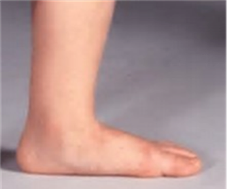
Flatfoot in children or pediatric pes planus is one of the most common etiologies that parents will bring their children to see the podiatrist about. Pediatric flatfeet can be broadly divided into two classes: symptomatic vs asymptomatic flatfoot. When you visit your podiatrist they will ask a number of questions that will help determine which class of flatfoot your child has. If the child has no pain, is neurodevelopmentally normal, hitting normal milestones with development, no history of excessive tripping then they are considered to have a asymptomatic flatfoot and in most cases will just be monitored. If the child has pain to the feet, any history of neurological or developmental impairment, is not hitting their normal developmental milestones on time or have an excessive history of tripping then they may need further workup to rule out any other underlying etiologies. We commonly give these symptomatic pediatric flatfoot patients custom orthotics or AFO braces to help allow them to function normally and eliminate their pain.
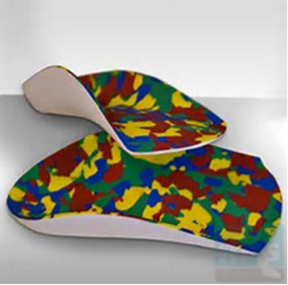
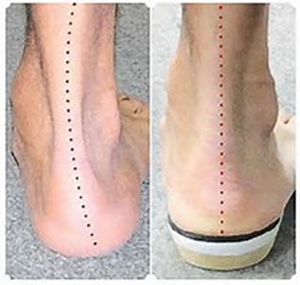
The pictures above show how an orthotic device can hold the foot in the correct functional position and prevent excessive pronation of the foot or rolling in of the arch.
In-toeing
Sometimes called “pigeon-toed”, in toeing is a condition in which the toes point inwards towards on another. It is important to see a podiatrist to evaluate why you are having intoeing as there are different causes. The major causes of intoeing are metatarsus adductus, interneal tibial torsion and femoral anteversion….. basically the intoeing is either coming from the foot bones, lower leg bone or thigh bone. In most cases intoeing is noticed in pediatric patients. Kids tend to grow out of this positioning deformity with age and growth but in some cases intervention, physical therapy of casting is needed.
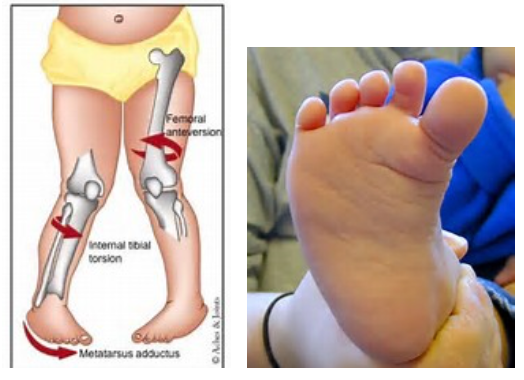
pigeon toed or in toeing child foot
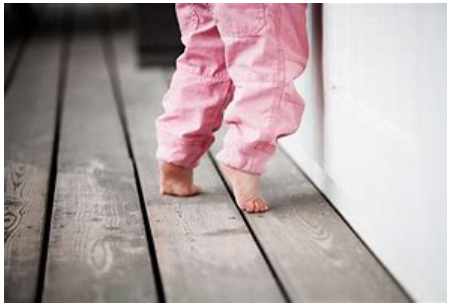
Child toe walking
Toe Walking
Toe-walking is a condition that tends to occur in early childhood. Sometimes the child will start out toe-walking from the beginning but other times children will learn to toe walk over time. It is important with this condition to be evaluated as sometimes toe walking can be a sign of an underlying neuromuscular disorder. In many cases toe walking is simply a learned behavior in which the child needs to be conditioned not to perform the behavior any more. The risk of not treating toe walkers is that they will develop contractures to the achilles tendon and require surgery or serial casting to re-lengthen this tendon.
Curly Toes
Curly toes are a deformity of the toes in which the toes curl towards the big toe. This most commonly affected the 4th toe but can also affect the 2nd or 5th toes. This tends to occur in early childhood from a tend imbalance in which the flexor tendon is overpowering the extensor tendon. In some cases people will out grow there curly toe deformity as they grow but in other cases surgical intervention may be necessary to prevent blistering, sore, pain with shoe gear or future arthritic changes to the toe joints.
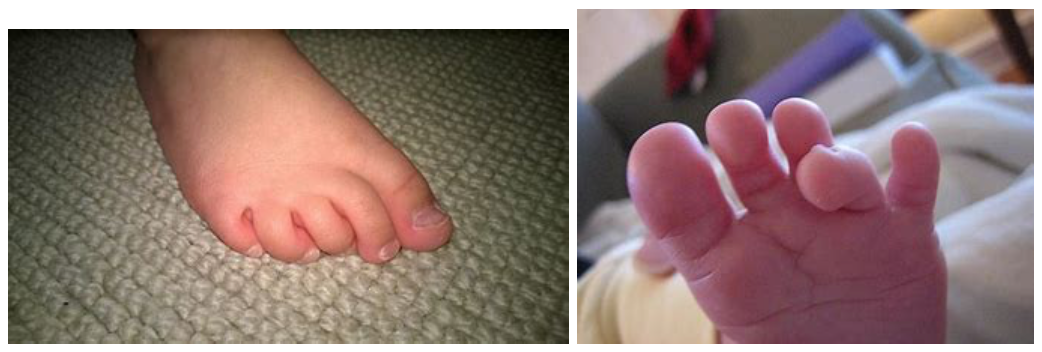
Childs foot with curly toes
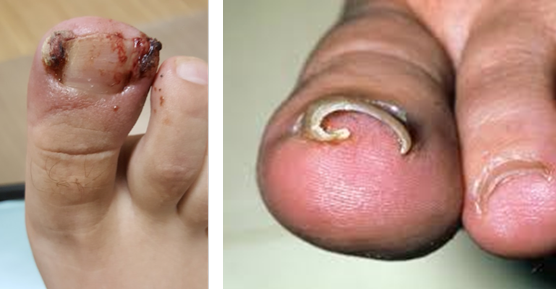
Ingrown Toenails
Ingrown toenails, also known as Onychocryptosis, are one of the most common pathologies that podiatrist treat. The first thing to realize about ingrown toenails is that they are not all created equal and so they are not all treated the same. There are different stages to ingrown toenails ranging from an irritated ingrown toenail to an infected ingrown toenail. The most important thing to remember is DON’T WAIT to come into the office if you think you have an ingrown toenail. There are treatment options when an ingrown toenail first presents that cannot be used if the ingrown toenail is more advanced.
Warts
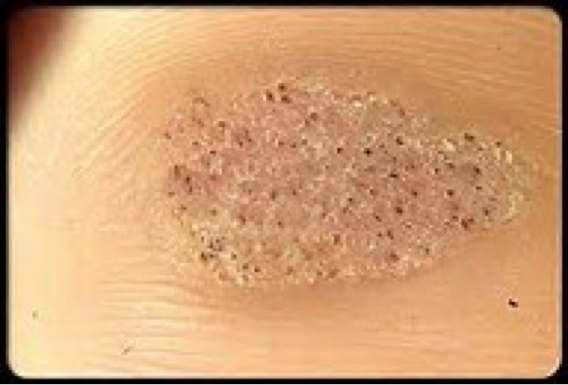
Warts of the foot, AKA plantar warts or verruca plantaris, are a viral infection caused by the Human Papillomavirus (HPV). Plantar warts can affected people of all ages but tend to be more common in adolescence or immunocompromised individuals. These lesions present as either a solitary wart or a cluster or warts called a mosaic wart. They tend to be painful with side to side compression, have an absence of skin lines through the lesion, and have small black dots in the center called “hyphae” which are actually dry blood contained within the capillaries of the wart. If you think you have a wart you should consult with your podiatrist right away as warts not only can multiply but can also spread from person to person by contact. When you come to the podiatry office your doctor will talk to you about the different treatment options for plantar warts including topical kerolytics (AKA cantharidin or salycyclic acid, the ingredient found in most over the counter medications), cryotherapy, or laser therapy.
The above picture depicts a plantar wart. Notice the absence of skin lines through the wart as well as the central hyphae. These clinical clues help determine that this lesion is a wart.
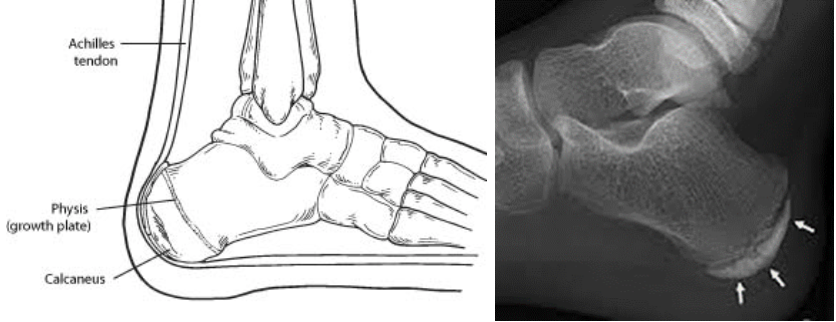
Calcaneal Apophysitis
Calcaneal Apophysitis (Severe’s Disease)
Calcaneal Apophysitis (also known as Sever’s Disease) is a painful inflammatory condition that most commonly affects children aged 8-14. The inflammation in this condition is centered around the calcaneal growth plate (heel) and tends to cause symptoms such as heel pain and limping. The cause of this condition is increased tension on the growth plate from repetitive trauma and tugging of the achilles tendon on the insertion of the growth plate. There are many treatment options for calcaneal apophysitis including offloading the heels with gel heel pads, crutches or a walking boot as well as rest, NSAIDs and physical therapy.