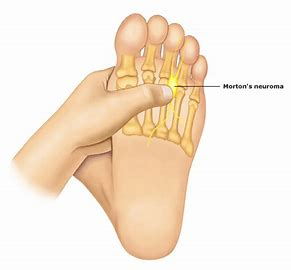
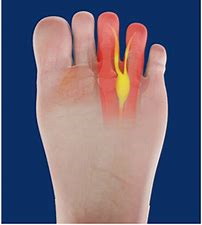
Symptoms:
Neuromas can cause tingling, burning, numbness, pain, or the sensation that something is inside the ball of the foot, or that something is bunched in the shoe or sock. Symptoms usually begin gradually, only appearing occasionally, usually when wearing narrow-toed shoes, or doing certain activities. The symptoms may go away when the shoe is removed, or the foot is massaged. Over time, however, the symptoms worsen and the discomfort can last for several days or weeks at a time. The symptoms become more intense as the neuroma enlarges and the changes in the nerve become more permanent. See your podiatrist as soon as you notice symptoms–the earlier the diagnosis, the less the need for invasive treatments or surgery.
Causes:
Anything causing compression or irritation of the nerve can lead to a neuroma developing. Wearing tight shoes, shoes with narrow toe boxes, or high-heeled shoes that squish the toes are the main causes of neuroma development. Some foot deformities, like bunions, hammertoes, flatfeet, or flexible feet, provide a higher risk for developing a neuroma. Activities involving repetitive irritation to the ball of the foot, like running or court sports, can also lead to neuromas. Sometimes, neuromas can develop after an injury or other trauma to the area.
Treatment:
Treatment options depend on how long you’ve had the neuroma, and on its developmental stage, and vary depending on the severity of the neuroma.